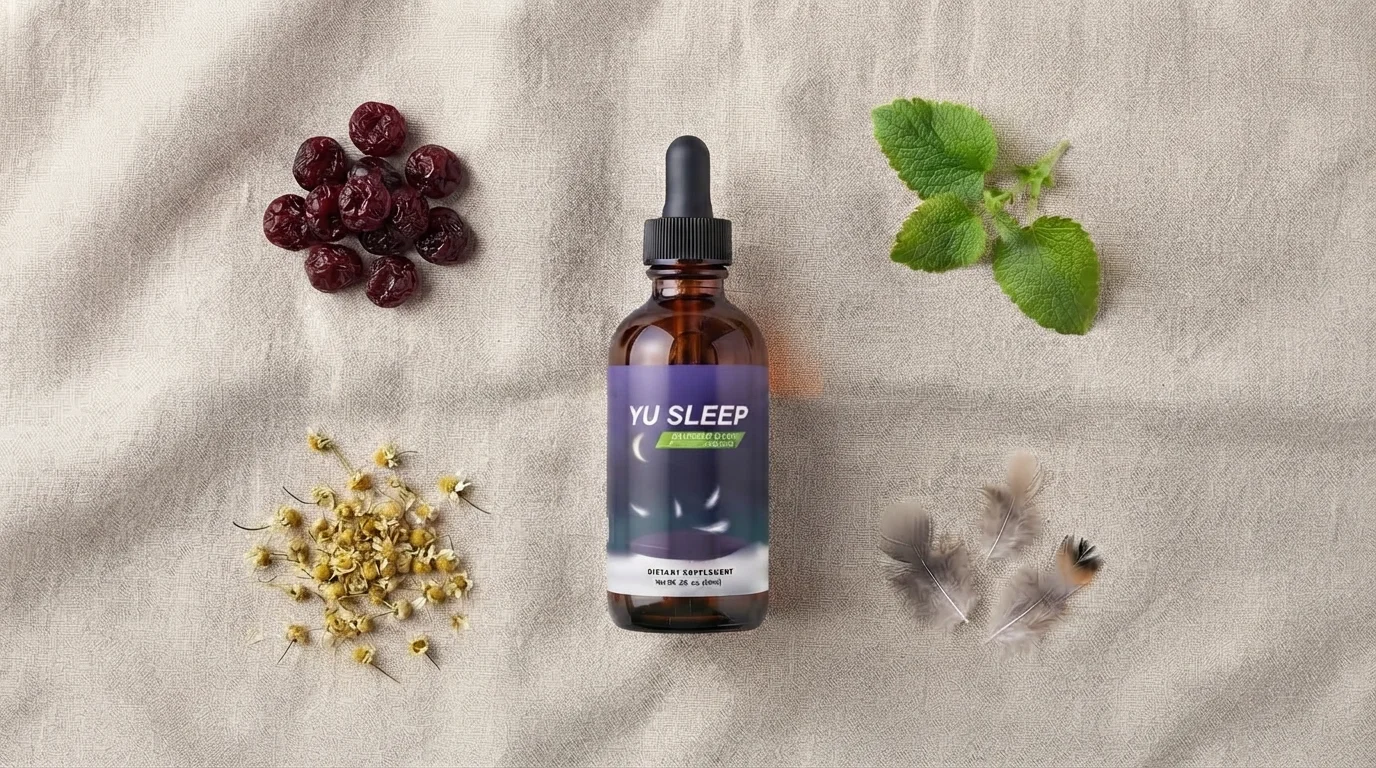
Yu Sleep’s formula combines low-dose melatonin (0.9mg) with magnesium glycinate, GABA, L-theanine, 5-HTP, tart cherry extract, lemon balm, apigenin, and B vitamins — all common, generally well-tolerated sleep-support ingredients with some research behind their individual use. The main gap is that only the melatonin dose is disclosed; the amounts of the other nine ingredients aren’t specified, so it’s hard to know if each is present at a meaningful dose.
Ingredient lists on supplement sales pages are usually written to sound impressive rather than to help you evaluate the product. Here’s what each ingredient in Yu Sleep’s formula is, and how strong the evidence actually is behind it — without repeating the marketing language used to describe them.
The Full Ingredient Breakdown
A hormone your body produces naturally to signal it’s time to sleep. Well-studied for reducing time to fall asleep. Lower doses (under 1mg) are increasingly used in newer formulations, based on research suggesting smaller amounts may be enough to nudge sleep onset without over-saturating melatonin receptors — though individual response varies.
A well-absorbed form of magnesium, a mineral involved in nervous system regulation. Magnesium deficiency is linked to poorer sleep quality in some studies, though evidence for supplementation improving sleep in people who aren’t deficient is more mixed.
A neurotransmitter associated with calming brain activity. Oral GABA supplements have an open scientific question around how much crosses the blood-brain barrier intact, so its effect when taken as a pill or liquid is less clearly established than melatonin’s.
An amino acid found naturally in tea, associated with promoting a calm, relaxed alertness. Reasonably well-studied for reducing anxiety-adjacent tension, with more modest direct evidence specifically for sleep.
A precursor your body converts into serotonin (and, indirectly, melatonin). Some research supports a role in mood and relaxation; it’s also one of the few ingredients here worth flagging for interaction caution if combined with certain antidepressants — check with a doctor if you take SSRIs or similar medication.
Contains small amounts of naturally occurring melatonin and compounds studied for a modest effect on sleep duration in a few small clinical trials. It’s a legitimate ingredient, though the “trick” framing used in some marketing overstates what a food-based melatonin source realistically does beyond the melatonin already in the formula.
An herb traditionally used for mild anxiety and sleep support, often studied in combination with other calming herbs rather than alone, which makes its individual contribution here hard to isolate.
A compound found in chamomile, sometimes described as a mild sedative. Most human evidence for apigenin’s sleep effects comes from chamomile itself rather than isolated apigenin, so it’s a reasonable but less directly studied addition.
B vitamins play a role in neurotransmitter synthesis generally, including pathways related to melatonin production. Useful as general nutritional support, though not typically considered sleep aids on their own.
The Missing Piece: Dosage Transparency
This is the most legitimate criticism of the formula, and it applies to most liquid supplement blends in this category, not just this one.
Only the melatonin dose (0.9mg) is publicly specified. The other nine ingredients are listed without individual amounts, which is common in this style of product but does limit how confidently you can evaluate whether each ingredient is present at a dose that matches what’s used in the studies referenced for it. A compound can appear on a label in a token amount and still be technically accurate to list — without a supplement facts panel showing exact milligrams, there’s no way to tell from marketing material alone.
What’s Reasonably Solid
- Every ingredient is a recognized, commonly used compound
- Melatonin dose is specifically disclosed and on the lower end
- No unusual or unregulated substances
What’s Left Unclear
- Amounts of 9 of the 10 ingredients aren’t disclosed
- Some ingredients have weaker individual evidence than others
- 5-HTP has a real interaction caution with some medications
If you take any prescription medication, particularly for mood or anxiety, it’s worth reviewing this full ingredient list with a pharmacist or doctor before starting — not because anything here is unusual, but because 5-HTP specifically has known interaction considerations.
Reviewed the Ingredients?
We currently point readers to Yu Sleep’s official checkout page.
See Current Pricing →Frequently Asked Questions
What are the main ingredients in Yu Sleep?
Yu Sleep’s formula includes low-dose melatonin (0.9mg), magnesium glycinate, GABA, L-theanine, 5-HTP, tart cherry extract, lemon balm, apigenin, and vitamins B6 and B2.
Why does Yu Sleep use less melatonin than other sleep aids?
Many over-the-counter sleep aids use 3-10mg of melatonin, while research suggests doses closer to 0.5-1mg may be sufficient for sleep onset with less next-day grogginess for some people. Lower doses are a legitimate formulation choice, though individual response to melatonin varies.
Does Yu Sleep disclose the exact amount of each ingredient?
The exact dose of melatonin (0.9mg) is disclosed, but the amounts of the other nine ingredients are not individually specified in the publicly available marketing material, which makes it difficult to assess whether each ingredient is present at a research-supported dose.