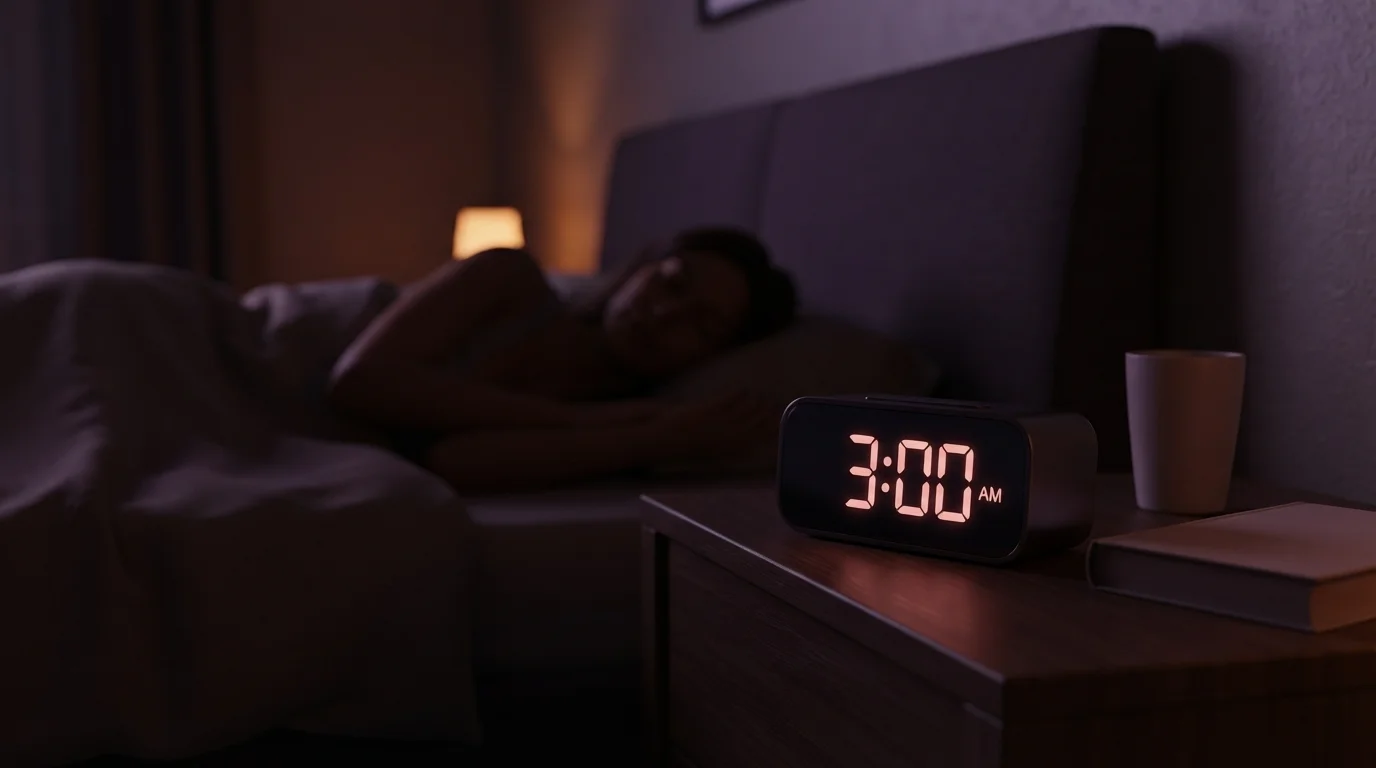
Waking up around 3AM usually isn’t random — it lines up with a natural shift into lighter sleep and the early rise of cortisol, your body’s main stress hormone, which together make this the window where something minor (noise, a stress thought, a blood sugar dip) is most likely to fully wake you. For most people this is a manageable pattern, not a disorder — but frequent 3AM waking tied to snoring, gasping, or racing anxious thoughts is worth mentioning to a doctor.
If you’ve noticed it’s always around the same time, that’s not your imagination — there’s real sleep physiology behind why 3AM (give or take an hour) is such a common waking point, and understanding it makes the problem feel a lot less mysterious.
The Sleep Science Behind the 3AM Wake-Up
Two things are happening around this time: your sleep gets lighter, and your cortisol starts climbing — both make waking easier, even without an obvious trigger.
Sleep isn’t one continuous state — it cycles through stages roughly every 90 minutes, alternating deep sleep and lighter stages. By the middle of the night, your cycles shift toward more light sleep and REM, which is simply easier to wake from than deep sleep. At the same time, cortisol — which is near its daily low in the first few hours of sleep — begins a slow rise that continues until it peaks shortly after you’d normally wake up. Combine lighter sleep with rising cortisol, and the early morning hours become the point where almost any disturbance is more likely to fully wake you rather than just register and pass.
Common Triggers That Tip You Into Waking
Caffeine or alcohol too close to bedtime
Caffeine has a long half-life and can still be active in your system 6+ hours later. Alcohol helps you fall asleep but disrupts sleep architecture in the second half of the night as it’s metabolized.
Blood sugar dips
A drop in blood sugar overnight can trigger a stress-hormone response that wakes you, particularly if dinner was high in refined carbs with little protein or fat to slow digestion.
Stress and racing thoughts
Because cortisol is already rising during this window, an active stressor in your life makes it easier for your mind to “switch on” the moment sleep gets light enough to allow it.
Room temperature
Body temperature naturally drops during sleep; a room that’s too warm can work against that drop and make lighter sleep stages more likely to tip into full waking.
Screen exposure before bed
Light exposure in the hour before sleep can shift the timing of your body’s melatonin release, which can make early-morning sleep stages lighter and less stable than they’d otherwise be.
When It’s Worth Seeing a Doctor
Occasional 3AM waking is normal. A consistent pattern with specific warning signs is not something to just manage with sleep hygiene alone.
If waking is paired with loud snoring, gasping, or choking sounds, it’s worth asking a doctor about sleep apnea, which is a physical breathing disruption, not something a supplement or sleep hygiene change will fix. If you wake with racing, anxious, or ruminating thoughts most nights, that pattern is also worth raising with a doctor, since it can point toward an underlying anxiety or mood condition that benefits from its own specific treatment. Frequent waking that persists for more than a few weeks and affects your daytime functioning is generally the threshold where self-management stops being enough.
What Actually Helps Tonight
-
Keep the wake-up boring
Avoid checking the time or your phone — both increase alertness and give your brain something to engage with right when you want it to disengage.
-
Try slow, extended-exhale breathing
A pattern like inhaling for 4 counts and exhaling for 6-8 counts activates your parasympathetic (“rest”) nervous system more directly than just lying still.
-
Don’t force it — get up if needed
If you’re not drifting back off within about 20 minutes, getting up briefly in dim light (no screens) and returning to bed once you feel sleepy again tends to work better than lying awake, frustrated.
-
Address the trigger, not just the symptom
If it’s consistently tied to alcohol, a late high-carb dinner, or a hot bedroom, the trigger is usually more fixable than the waking itself.
Where Supplements Fit Into This Picture
A supplement can support the underlying physiology — some people find lower-dose melatonin, magnesium, or calming compounds like GABA and L-theanine helpful for staying asleep — but it’s one tool among several, not a replacement for addressing an obvious trigger like late caffeine or an overly warm room. If you’re specifically researching supplement options, our honest look at Yu Sleep and ingredient breakdown are a reasonable place to start.
Considering a Supplement?
We currently point readers to Yu Sleep’s official checkout page. Intended for readers in the US, Canada & UK.
See Current Pricing →Frequently Asked Questions
Why do I always wake up around 3AM specifically?
Around 3-4AM, your body is naturally cycling through lighter sleep stages and cortisol (a stress hormone) begins its gradual rise toward morning, which together make this window the easiest time for something — noise, stress, a full bladder, blood sugar dip — to fully wake you rather than just nudge you.
Is waking up at 3AM a sign of a health problem?
Occasionally, yes, but not usually. Frequent 3AM waking tied to loud snoring or gasping can indicate sleep apnea, and waking paired with racing, anxious thoughts most nights can indicate an anxiety or mood disorder. If it happens most nights for several weeks, it’s worth discussing with a doctor.
What’s the fastest way to fall back asleep after waking at 3AM?
Avoid checking the time or your phone, keep the room dark, and try slow breathing (like inhaling for 4 counts, exhaling for 6) rather than forcing sleep. If you’re not back asleep in about 20 minutes, getting up briefly in dim light and returning to bed tends to work better than lying there frustrated.